

The migrant-killing vigilante film that’s been banned in Germany
- WGON

- 44 minutes ago
- 6 min read

Uwe Boll, the 60-year-old German film director, would be the first to admit that he is more controversy magnet than critical darling. Even so, his latest work, Citizen Vigilante, might be his most controversial film yet. Banned in his native Germany for its extreme violence and supposedly anti-migrant message, and starring the cancelled actor Armie Hammer, it is being released in the United States this week but currently has no British distribution.
Several of Boll’s films, usually low-budget video-game adaptations, have been called some of the worst ever made. His 2005 picture Alone in the Dark led Entertainment Weekly to say, “the film on your teeth after a three-day drunk possesses more cinematic value”, while Empire magazine called him “the Ed Wood of unwanted video-game movie adaptations”.
Citizen Vigilante itself begins with a mother being stabbed to death by migrant criminals in front of her horrified son and features Hammer as Sanders, an ordinary man who becomes increasingly frustrated by the breakdown of law and order and so takes matters into his own hands. He metes out vigilante justice to both criminals and the corrupt with gusto; his targets are predominantly, but not exclusively, migrants. In the process, he becomes a heroic figure to many – Boll, it might appear, among them.

When I speak to Boll over Zoom, the director is keen to present his film as a reflection of what is happening in society today, rather than some kind of John Wick-esque exercise in wish fulfilment. “The subject matter is so in our faces, and if you look at what’s just happened in Belfast, it’s incredibly timely. I hope that the film gets released in Britain sooner rather than later, because I know that in America there’s a lot of interest and response. In Europe at the moment, people are shying away from making this kind of harsh political movie, but I’ve always tried to smuggle politics into genre movies. This isn’t a documentary, it’s a thriller and I hope that viewers respond to it.”
Citizen Vigilante was inspired by a notorious case in Hamburg in 2016, when a group of teenagers gang-raped a 14-year-old girl and left her for dead, only for the perpetrators to walk free with suspended sentences. Parallels between this and the recent case in Britain when three teenage boys walked free after raping two teenage girls are obvious, and for Boll, it’s important that his pictures respond angrily to what he sees as social injustices.
“If you look at what happened in Hamburg, where the rapists walked free without any penalty, the coverage in the media was like ‘oh, the poor perpetrators’,” says Boll. “It’s as if we’re living in a completely insane and absurd political environment, especially in Europe, where people have completely lost track. There is a huge difference between so-called ‘hate speech’ and stabbing people in the neck. But facts don’t matter any more.”
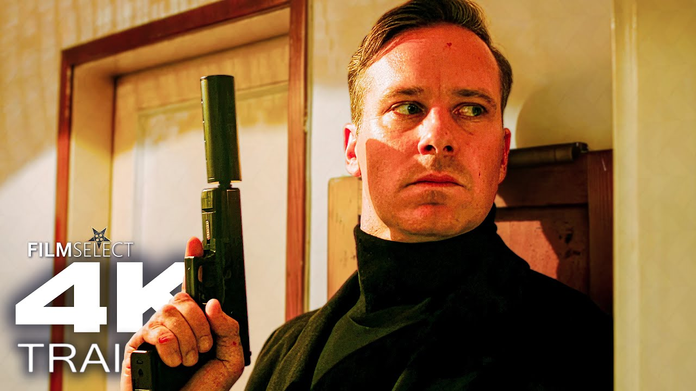
This is possibly overstating the case, but nobody is looking to Boll for subtlety and nuance. Instead, Boll’s picture depicts vigilante violence with a clear-sighted – some might even say overly sympathetic – approach, though he argues that contemporary cinema has shied away from realism. “For people who have suffered from violence, they know how traumatising it is, and how it leads to society flipping out. But for those who come from the left of the spectrum, who have grown up in sugar-coated circumstances, they don’t know how to act when situations turn violent.”
Echoing the words of Restore Britain and its leader, Rupert Lowe, Boll goes on to suggest that “They don’t know what people think of Islamic migration, and they don’t know how these people act on the street, demanding power and influence. Instead, they see them as poor migrants, whereas the mentality is far more macho, more ‘I’m not poor, I’m the boss of the street now.’” His candour is at least refreshing; it is impossible to imagine any other contemporary filmmaker speaking so freely and openly about the problems facing society.

The film is implicitly critical of Boll’s native Germany, despite being set in the United States (and filmed, for budgetary reasons, in Croatia), and he has been rewarded with its being effectively banned in his home country. “The rating system refused to give us a rating, so now you can only watch it if you bring in a Blu-ray from Austria or Switzerland. And I think they did that on purpose. It was a deliberate censorship decision. I hired a lawyer to complain about it, but we lost in a six-two vote, as I was told that the film was inciting violence against migrants.”
Boll is used to considerable opposition to his films, which also include the widely derided House of the Dead and Postal. The director’s robust, two-fisted approach to his critics – quite literally, in 2006, when he fought and beat five of his most vehement detractors in 10-round boxing matches – has seen him become a pariah in Hollywood and the European film industry, but he continues to obtain funding from a variety of sources. His low-budget pictures, often starring actors who have either passed their prime or faced difficulties in the profession, usually turn a profit thanks to foreign sales and a public appetite for sensational, often violent, content on screen.

However, an underappreciated aspect of his oeuvre – not that Boll would be so pretentious as to call it that – is its shift from cheerfully disposable B-movies to what he would describe as more political film-making, in typical take-no-prisoners style. Citizen Vigilante is one example of what we could call Boll-in-a-china-shop provocation.
“It’s absurd how I feel politically,” Boll tells me. “Now you’re being told that if you’re a conservative about anything – social, sexual, political – that you’re a Nazi. But this is how things stand at the moment. If you question anything – such as the hundreds of billions being pumped into Ukraine – then you’re either a friend of Putin or a Nazi or both.” Is he? Boll laughs, like a man who has been asked this question several times before. “I am not a Nazi!”
Boll, in fact, would not even regard himself as a conservative. “I grew up a Social Democrat, as did the rest of my family, and we voted for leaders like [former German chancellor] Gerhard Schröder. Now, of course, he’d be persona non grata as well, despite having done the only economic reform in Germany that worked. These days, Social Democrats want leaders like Mamdani in New York: literal communists who just want to tax the rich to death and have the government take over the economy so we can all follow socialist rules.”
The director talks politics with refreshing candour and vigour, whether you agree with his views or not, and he brings a similar openness to his film-making. “I cast Armie Hammer in the lead because he’s a great actor, and also because he was cancelled and wanted to work. He wasn’t charged with anything, there was no lawsuit. He was just a guy who was famous and f------ around. He’s a handsome, charismatic guy, who could be James Bond. In fact, he’d be perfect for the part.” Boll laughs, and says, “That way, you wouldn’t even have to cast a woman as 007.”

Boll expresses a desire to have an Expendables-esque lineup of other great thespians who have fallen foul of the system in his pictures. “Take Kevin Spacey, for instance. One of the best actors working today. I’d love to cast him in a strong male lead in one of my pictures, but by doing so, I can guarantee that the film would not get an American distributor. To me, that’s unfair. He won all the lawsuits and legal cases, and now he’s stuck in these very cheap exotic movies he’s making now. I think he should come back and get another shot.”
Boll has never been in the mainstream of the film industry, despite having, at various times, cast actors as respected as Jason Statham, Ben Kingsley, JK Simmons and, now, Hammer in his pictures. He dismisses Hollywood entirely: “they schmooze up to Trump but most of them hate him, and with the possible exception of Paramount, none of them are conservative…all the decision-makers, from Netflix and Apple to Amazon, are all on the left, and they’re so politically correct that they won’t greenlight anything that is politically critical.”

He talks such a good game that it’s easy to forget Boll has been a critical punchbag since his career started in the Nineties, but he is philosophical about his unwanted designation as “the worst director of all time”. “I see all that as old news these days. Every article about me begins with how ‘I’m the worst director in the world’, but it’s so far from reality. I’ve made 40 pictures with Oscar-winning actors.”
Boll wants Citizen Vigilante to be taken seriously, and our interview ends on a sombre note. “I’m not surprised about the rioting that I saw in Belfast the other day. In the end, this is what you get when you ignore people, and that’s the same as in my movie. I’m not condoning violence of any kind – it’s unacceptable and I’m against it in any form – but I think people are just saying ‘Enough is enough’ now.”

Comments